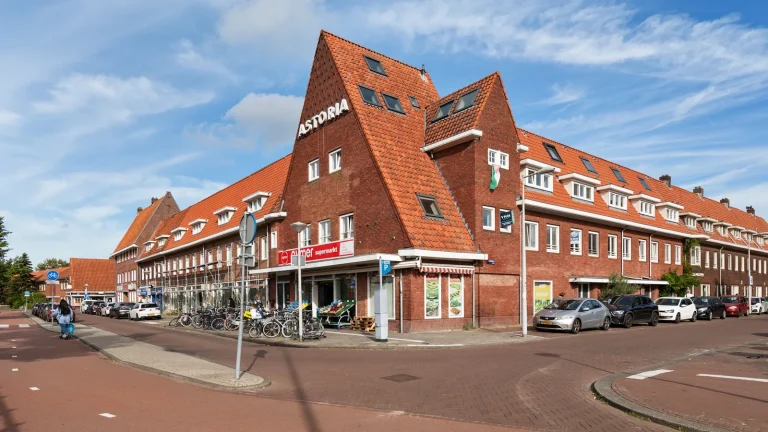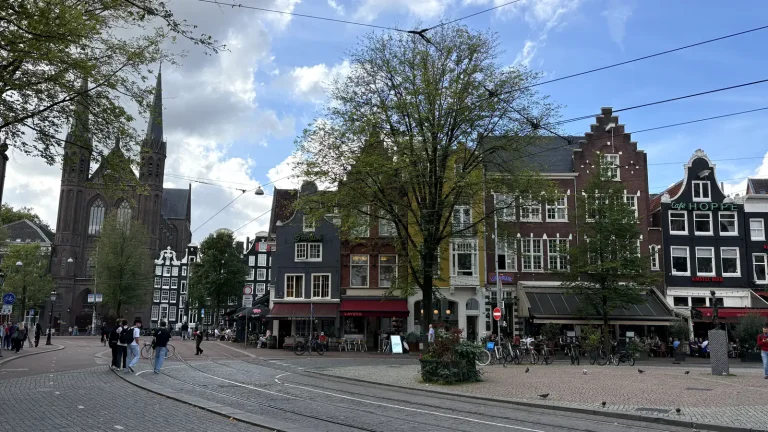
Amstelveen and Diemen both border Amsterdam. Amstelveen lies on the south side of the city, right next to Buitenveldert and the Amsterdamse Bos. Diemen lies on the east side, between Watergraafsmeer, IJburg and Amsterdam-Zuidoost.
Even so, neither of them is part of Amsterdam. Both are independent municipalities, with their own town hall, their own rules and their own atmosphere. I always call it village life with the city around the corner.
Where is the boundary between Amstelveen and Amsterdam?
Amstelveen starts where Buitenveldert ends, on the southern edge of the Zuid district. Cycle south from the Zuidas and you are in Amstelveen within a few minutes. The Amsterdamse Bos, by the way, lies mostly in Amstelveen, even though the forest belongs to the City of Amsterdam.
Apart from Amsterdam, Amstelveen borders Haarlemmermeer, Aalsmeer, Uithoorn, Ouder-Amstel and De Ronde Venen. That last one is already in the province of Utrecht.
The boundary has moved over time. Until 1964, Amstelveen was called Nieuwer-Amstel. In 1896 and again in 1921, Amsterdam took over the northern and busiest part of that municipality. What remained became the Amstelveen of today, with just over 95,000 residents.
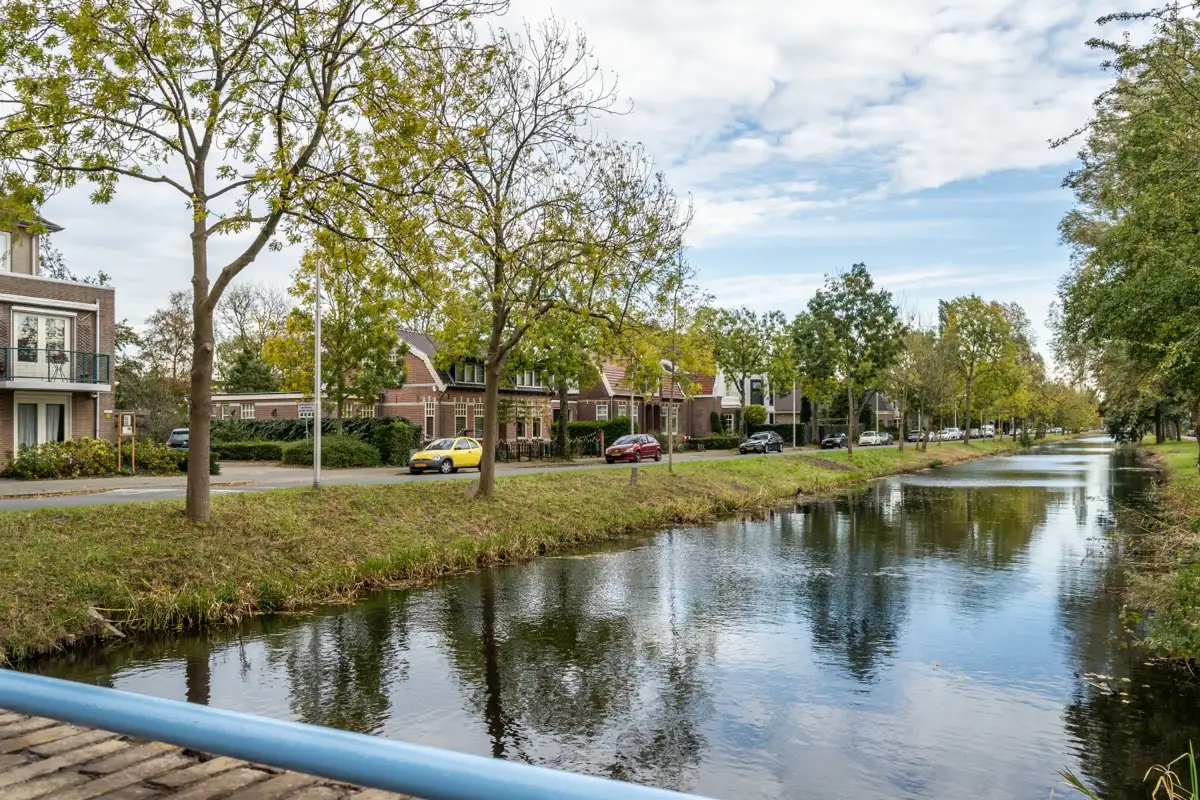
Where is the boundary between Diemen and Amsterdam?
Diemen lies on the east side of Amsterdam and is surrounded by the city on three sides: IJburg to the north, Watergraafsmeer to the northwest, and Amsterdam-Zuidoost and Weesp to the south. Weesp has been part of Amsterdam since 24 March 2022. To the west, Diemen borders Duivendrecht (municipality of Ouder-Amstel), and to the east Muiden (municipality of Gooise Meren).
Here too, the boundary has shifted. Until 1896, the hamlet of Outersdorp belonged to Diemen. Amsterdam took it over to build the Indische Buurt, and the Flevopark now lies on that spot. Diemen itself has just over 33,000 residents.
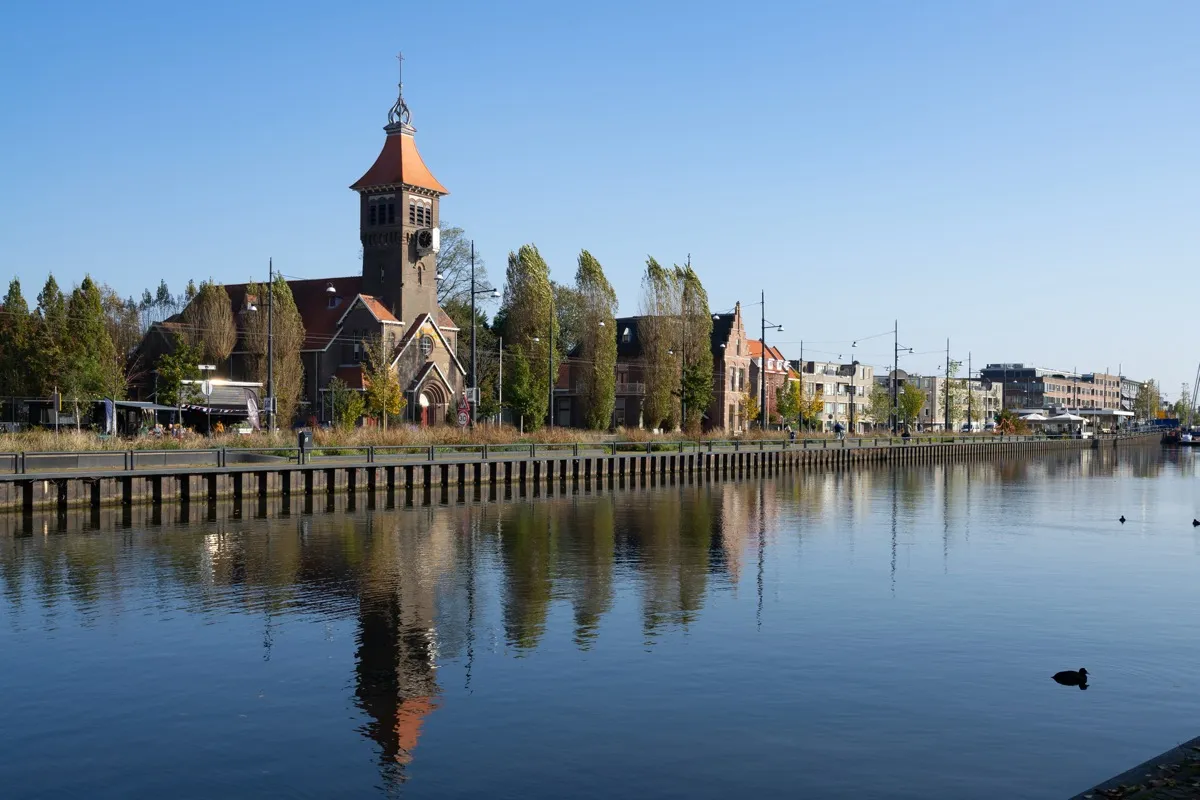
Why do people choose Amstelveen or Diemen?
The doubt I hear most often is actually very simple: then you no longer live in Amsterdam. And a lot of people really want to live in Amsterdam. But there is plenty on the other side of the scale:
- Usually no ground lease. More on that below.
- Lower prices and more space. For the same budget you usually get more square metres, and more often a garden of your own.
- Good schools nearby. Nice if you have children, or would like to.
- Peace and quiet. Quiet streets and lots of green, with the city still close by.
Who comes to look? Mostly Amsterdammers who want more space, often a family that has outgrown an apartment in the city. Amstelveen also attracts a lot of internationals. There are many international companies nearby, the International School of Amsterdam is on the Sportlaan in Amstelveen, and Schiphol is about fifteen minutes away by car.
Is there ground lease in Amstelveen and Diemen?
In Amsterdam, a large share of homes stands on land leased from the city, known as ground lease (erfpacht). You own the house but not the land, and you either pay an annual ground rent (canon) or have bought it off. In Amstelveen, an ordinary owner-occupied home has no ground lease: the house and the land are both yours.
In Diemen, most owner-occupied homes also stand on freehold land, but some of the older homes are on ground lease from the municipality. When those leases expire, Diemen converts them to perpetual ground lease, and you can buy off the ground rent. So always check the documents of the property to see what applies. What ground lease in Amsterdam means for your costs, you can read in our blog what are the costs involved in buying a house in Amsterdam.
How quickly can you get to Amsterdam from Amstelveen and Diemen?
That is the second question I get a lot: will we still be able to enjoy the city? Usually, yes. Both are a short bike ride from the city, and public transport is well organised.
- Amstelveen: tram 5 runs from the Stadshart via Amsterdam Zuid station to Amsterdam Centraal. The Amsteltram (line 25) connects Uithoorn and Westwijk with Amsterdam Zuid station. By bike, you can get from the Stadshart to the Zuidas in about fifteen minutes.
- Diemen: metro 53 stops at Diemen Zuid and Verrijn Stuartweg, trains stop at Diemen station and at Diemen Zuid, and a tram runs to Amsterdam-Oost. By bike, you are in Oost in about ten minutes, depending a little on where in Oost you need to be.
By car, Amstelveen is close to the A9 and the A10, and Diemen to the A1, the A9 and the A10.
Amstelveen or Diemen: what is the difference?
Amstelveen is green and spacious, with the Amsterdamse Bos as its back garden and the Stadshart as its centre, with more than two hundred shops around the Stadsplein. It is one of the more expensive municipalities around Amsterdam. If you work at the Zuidas or often need to get to Schiphol, it is a good place to be.
Diemen feels more like a village. It has its own village centre, a market on the Diemerplein every Wednesday, and the Diemerbos just around the corner. You are close to Amsterdam-Oost and Watergraafsmeer, and with the metro and the train you are quickly in the rest of the city.
A family home in Diemen: who came to look?
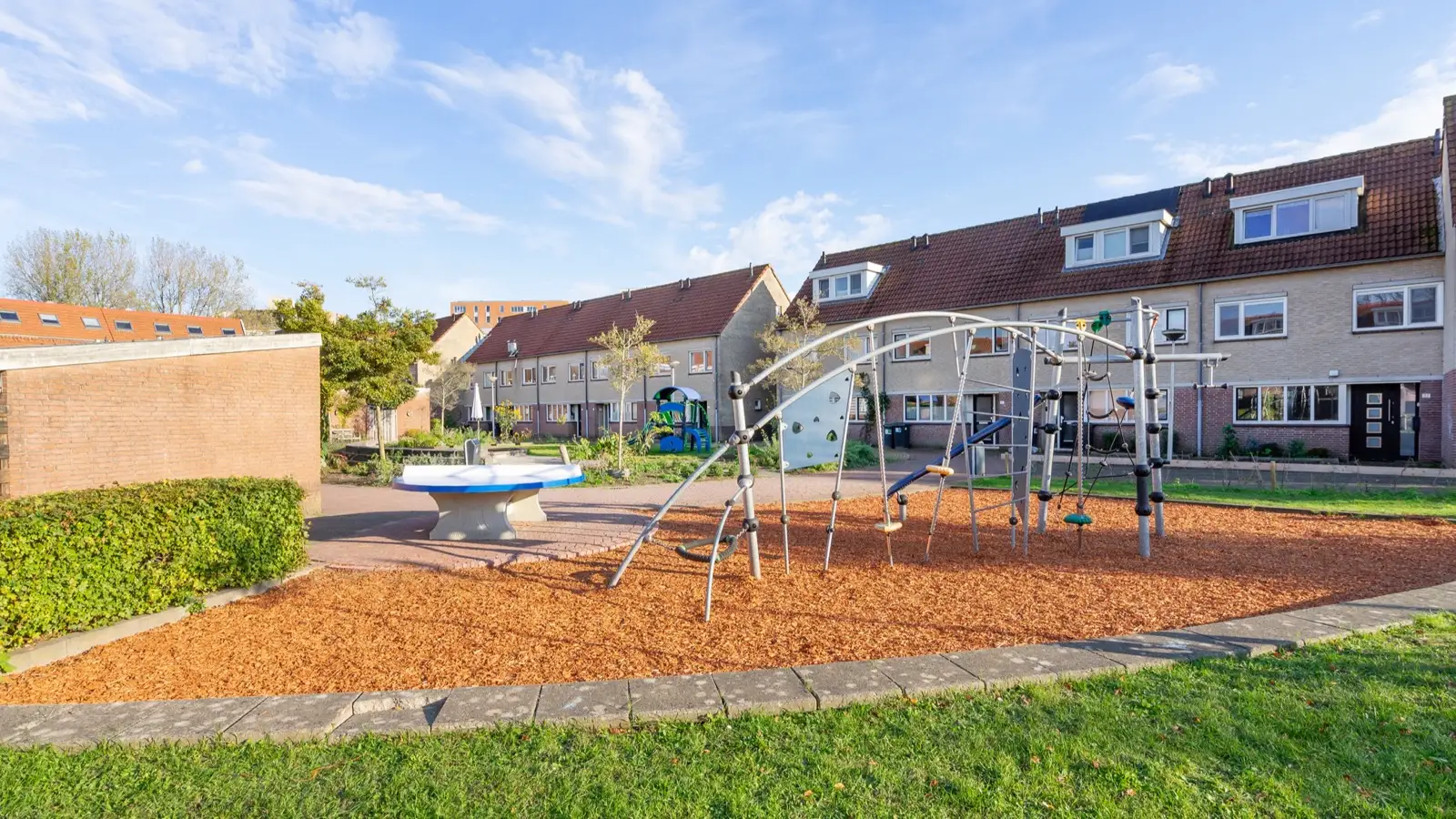
I sold a family home (eengezinswoning) on the Meidoornplein in Diemen, in the Bomenrijk neighbourhood. Most of the people who came to look had children or were planning to. They wanted to keep their connection with the city, but they also wanted a family home with a garden of their own. A nice bonus: there was a playground right in front of the house.
I see that picture more often. People do not give up on the city. They move a few kilometres and keep Amsterdam as the place they cycle to for dinner, a museum or a terrace.
A smaller home in the city or more space just outside it?
That really is a very personal choice. If you want to live within walking distance of your favourite coffee spots and make the most of the city, you choose to live a bit smaller. You are out and about a lot anyway.
If you no longer need that every day, you might prefer peace and space, and live a bit bigger. That is why I always ask my clients a few critical questions, so they think it through properly and make a well-considered choice:
- How often do you really go into the city now, and what do you do there?
- What will your life look like in five years? Think of children and school.
- How much travel time is still fine for you, even on a rainy Tuesday in November?
Looking for a home in Amstelveen or Diemen? A buying agent who knows both municipalities can help. Need to sell your apartment in the city first? Take a look at our selling agent page. Still in doubt? Feel free to call or email, and we will think it through with you.
Frequently asked questions
Is Amstelveen part of Amsterdam?
No. Amstelveen is an independent municipality with just over 95,000 residents and its own local government. It does border Amsterdam directly, and until 1964 it was called Nieuwer-Amstel.
Is Diemen part of Amsterdam?
No, Diemen is also a municipality of its own, with just over 33,000 residents. It lies on the east side of Amsterdam and is surrounded by the city on three sides.
Is the Amsterdamse Bos in Amsterdam or in Amstelveen?
Mostly in Amstelveen. The forest does belong to the City of Amsterdam. A smaller part lies in Amsterdam itself.
Is a house in Amstelveen or Diemen cheaper than in Amsterdam?
Usually you get more space for the same money, often with a garden. Amstelveen is one of the more expensive municipalities around Amsterdam, though, so the difference depends a lot on the neighbourhood and the property.
Do you also work in Amstelveen and Diemen?
Yes. We have sold homes on the Sportlaan and the Fideliolaan in Amstelveen, among others, and on the Meidoornplein and the Raadhuisstraat in Diemen.