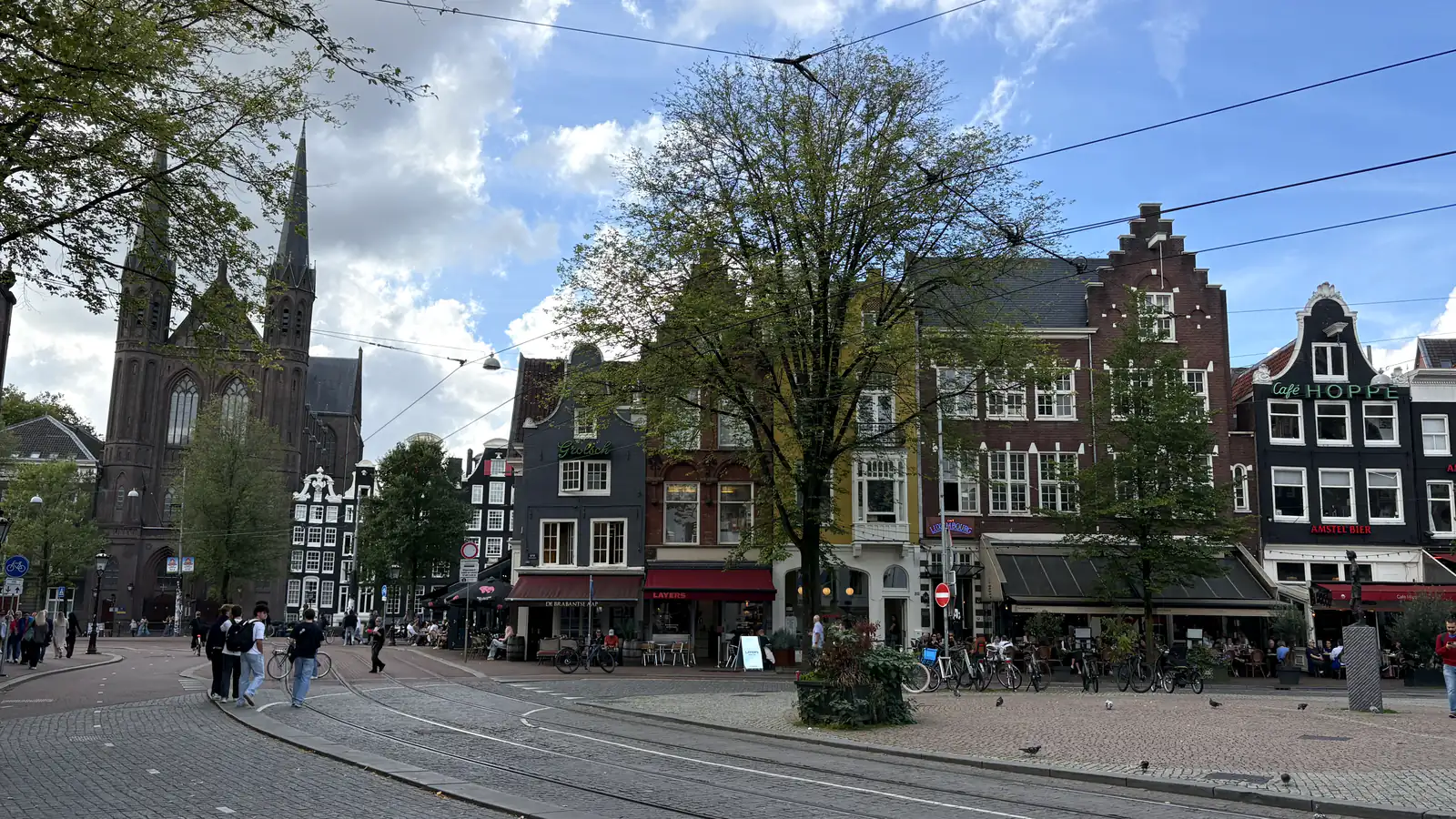
The Spui is a square in the middle of Amsterdam’s old city centre, between the Singel and the Rokin, where books, students and cafés have come together for centuries. You will find Athenaeum Boekhandel, The American Book Center, a book market every Friday, Café Hoppe from 1670 and the gateway to the Begijnhof. It is one of the few open squares in the old centre, which makes it a place where you naturally stop for a moment.
Why is the Spui called the Spui?
Where you now walk over the paving bricks, there used to be water. Until 1425, the Spui and the Grimburgwal formed the southern edge of the city. There was a sluice here that let the water drain out of the city, which in Dutch is called “spuien”, and that kept the salt water out. That is where the name comes from.
In 1882 the water was filled in and the Spui got the shape it has today: a wide, elongated square with trees that opens onto the Kalverstraat and the Rokin. If you come from the Singel, you can see how the city suddenly gets some space here. In a city centre full of narrow streets and canals, that is rare.
Why is the Spui the intellectual heart of Amsterdam?
Around the Spui, a lot revolves around books, study and debate. You can see that in the shops and in the buildings around the square.
Athenaeum Boekhandel & Nieuwscentrum (Spui 14-16) is the best-known bookshop on the square. Johan Polak and Rob van Gennep opened it in September 1966, and it is still one of the largest independent bookshops in the city. In the Nieuwscentrum you will find magazines from all over the world, including titles you will not see anywhere else in the Netherlands.
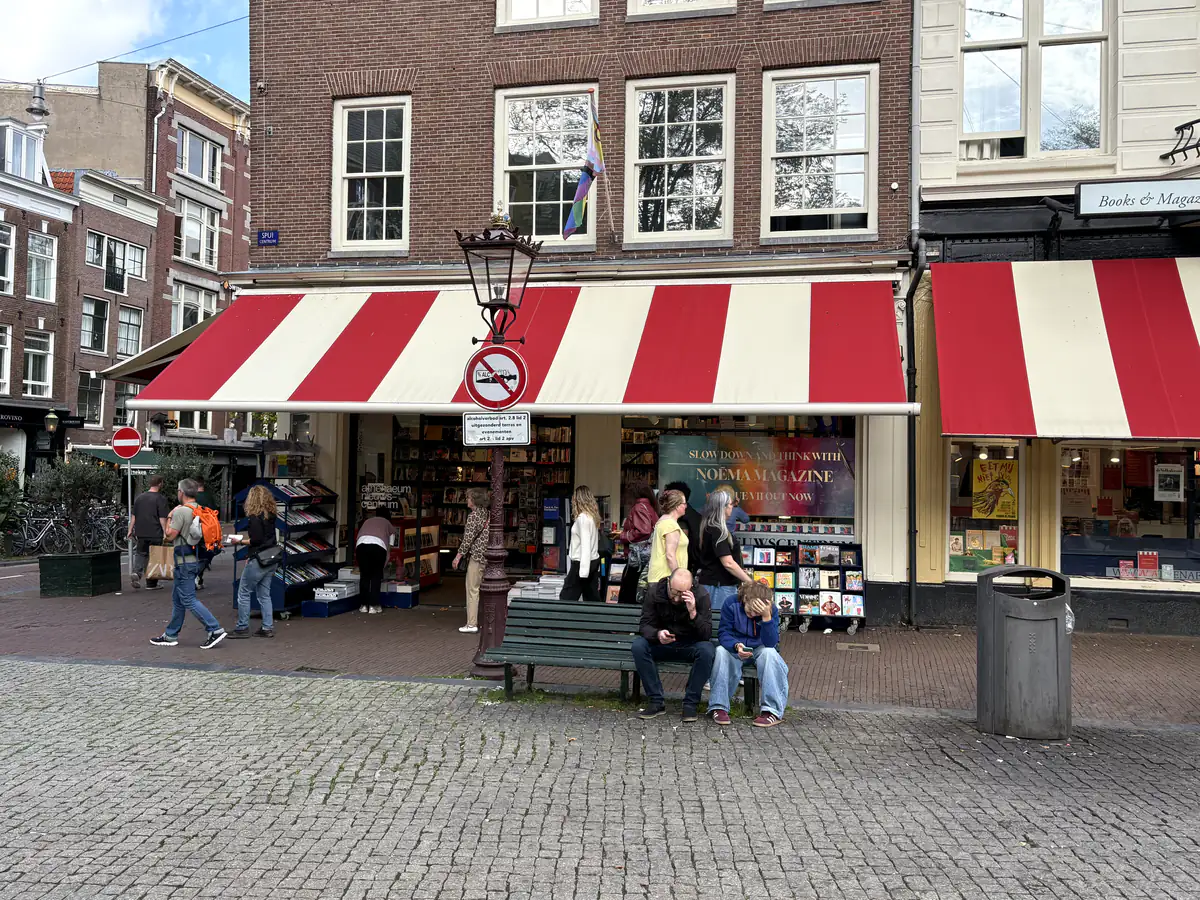
The American Book Center (Spui 12) has been here since 1972. It is an independent family business with three floors of English-language books, from new novels to reference works. For expats and students, it is a regular stop.
On Fridays the book market is on the square, from 10:00 to 18:00. Around 25 traders sell second-hand and antiquarian books there. If you come without a list, just to browse, you will often find something you were not looking for.
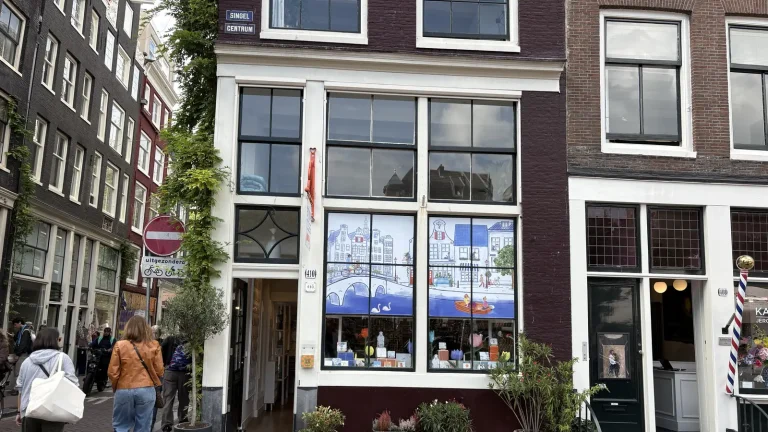
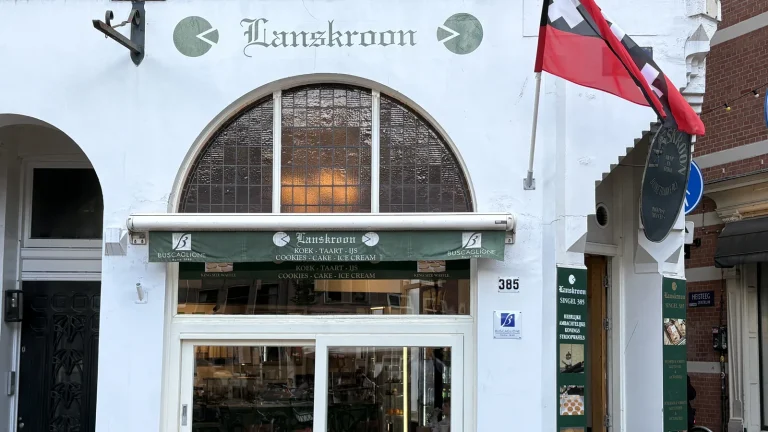
The University of Amsterdam is part of the story too. The Maagdenhuis at Spui 21 is the university’s administrative building and was occupied by students in 1969, one of the best-known student protests in the country. For many years, the University Library (Singel 425) was on the corner with the Singel; it moved to the Vendelstraat in the summer of 2025. Students and lecturers still walk in and out here all day long.
What is Het Lieverdje?
In the middle of the square stands a small bronze boy: Het Lieverdje (“the little darling”), made by the Amsterdam sculptor Carel Kneulman. It has been here since 1960 and was a gift from a cigarette manufacturer. The name comes from a story by Henri Knap, a writer for the newspaper Het Parool, about an Amsterdam street kid with a heart of gold.
In the 1960s the statue became the meeting point of Provo, the youth movement that challenged the authorities in playful ways. “Anti-smoking magician” Robert Jasper Grootveld held weekly happenings there, often to the annoyance of the police. In March 2024 a truck accidentally knocked the statue over. It has been restored and is back in its place.
Where can you eat and drink on the Spui?
For such a small square, there are a lot of good places to eat and drink. These are the addresses you should know:
- Café Hoppe (Spui 18-20) is a brown café (bruin café, a traditional Dutch pub) from 1670 and one of the oldest in the city. The oldest part is a listed monument; everyone stands there, because there is hardly anywhere to sit. According to the café itself, Hans van Mierlo laid the foundations for the political party D66 here.
- Café Luxembourg (Spui 24) has been a grand café since 1987, modelled on the cafés of Paris. In the conservatory at the front, you have the best seat for people-watching.
- Café de Zwart (Spuistraat 334, on the corner with the Spui) has been around since 1921, has an art deco interior and was long known as a writers’ café. Journalists and politicians liked to come here too.
- The Seafood Bar (Spui 15) is the place for fish and shellfish. The restaurant was set up by a fishmonger and started in 2012 on the Van Baerlestraat. On the Spui you sit in a light, modern interior with marble, and the menu has classics such as mussels, fish & chips and a plateau fruits de mer.
- Rituals Café (Spui 10) is next to House of Rituals and is the brand’s first café. Good for coffee, breakfast or lunch, with homemade cakes and pastries.
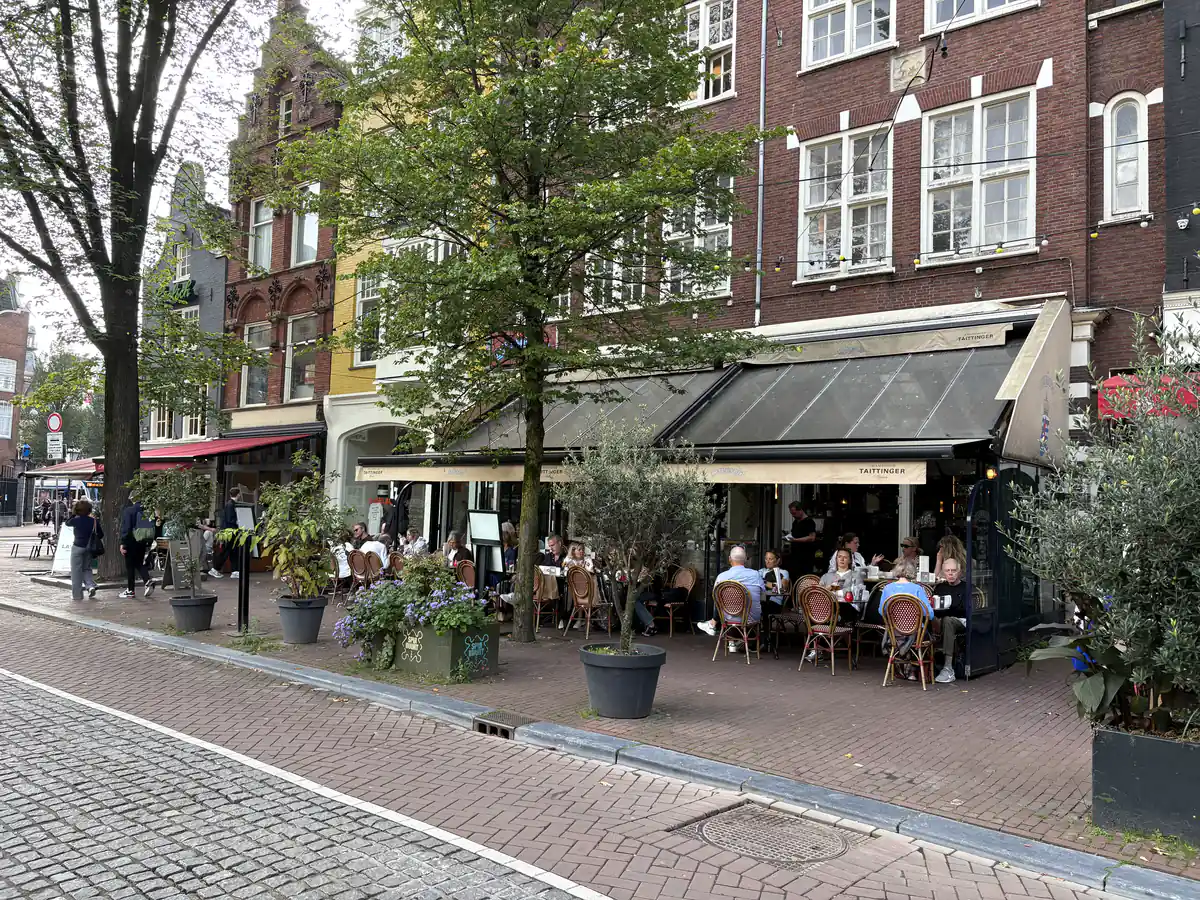
Our office is a few minutes’ walk away on the Singel, so I come here regularly myself. On a sunny afternoon, the terrace of Luxembourg or Hoppe is hard to beat.
How do you get into the Begijnhof?
On the north side of the Spui there is an inconspicuous door to the Begijnhof, one of the oldest hofjes (enclosed courtyards) in Amsterdam. Behind that door is a quiet garden with small houses around a lawn, right in the middle of the busy city.
Note: during the day, you can no longer get in from the Spui. The residents had too much trouble with crowds and noise, so the entrance on the Spui is closed during the day. Visitors go in through the gate on the Gedempte Begijnensloot, on the Kalverstraat side. The Begijnhof is only open to visitors during the day.
Inside stands the Houten Huis (Wooden House, Begijnhof 34), from around 1528. For a long time it was seen as the oldest wooden house in the Netherlands, until an even older house was found in the Warmoesstraat in 2012. The English Church (Engelse Kerk) is in the courtyard as well. People still live here, so keep it calm and talk quietly.
Can you live on the Spui?
There are very few homes on the Spui itself. Almost all the buildings are shops, cafés, offices or university buildings. The homes that are there are usually on the floors above the shops, for example above Athenaeum, and on the Spuistraat side.
Living here suits someone who wants to be right in the middle of the city and does not mind that the square stays lively until late. On Fridays the market is right outside your door, the terraces fill up in good weather and tourists and students walk past all day. If you are looking for more peace and quiet or more choice, also take a look in the streets and canals around it. You can read what is going on in the city centre on our page about living in Amsterdam-Centrum.
Looking for a home in the city centre? Then a buying agent who knows the streets will help. Want to sell your own home in the centre? Take a look at our selling agent page.
Do you have a tip for the Spui that is not in here? Feel free to let us know.
Frequently asked questions
When is the book market on the Spui?
Every Friday from 10:00 to 18:00. Around 25 traders sell second-hand and antiquarian books.
Can you get into the Begijnhof from the Spui?
Not during the day. The entrance on the Spui is closed to visitors during the day; you go in through the gate on the Gedempte Begijnensloot, on the Kalverstraat side.
What is the oldest café on the Spui?
Café Hoppe, which has been there since 1670. It is one of the oldest brown cafés in Amsterdam, and the oldest part is a listed monument.
Who made Het Lieverdje?
The Amsterdam sculptor Carel Kneulman. The statue has stood on the Spui since 1960 and became known in the 1960s as the meeting point of Provo.