In the twentieth century, Amsterdam had around eighty cinemas, one in almost every neighbourhood. Most of them have gone, but the buildings are often still there: as a casino, a supermarket, an arts centre, a restaurant or as homes. If you look closely at the facade, you can still see the past. Here are five examples, from the Reguliersbreestraat to the Mosplein in Noord.
Why did the neighbourhood cinemas disappear?
Until the 1960s, people in Amsterdam simply went to the cinema around the corner. After that, things moved fast. First television kept audiences at home, later the video recorder. One neighbourhood cinema after another closed its doors.
The buildings stayed and got a new life. Sometimes an illuminated sign, a name in wrought iron or a facade without windows still gives away what was once inside. The facts in this blog come from the article by Remco de Ridder in the Amsterdam newspaper Het Parool (in Dutch) of Friday 2 October 2026, in which he visits eight former cinemas.
What is in the old Cineac now?
Opposite Tuschinski, at Reguliersbreestraat 31-33, the big letters Cineac still hang above the facade. Cineac comes from Cinéma d’Actualité: a news cinema, where you could walk in all day long for a newsreel of about an hour. The news of the day, on the big screen.
Architect Jan Duiker designed the building especially for this, with an egg-shaped auditorium and a glass projection booth that seemed to float above the entrance. It opened in 1934. Duiker only just lived to see it: he died four months later.
Once everyone had a television at home, the newsreel lost its purpose and the Cineac became an ordinary cinema. In 1994, property dealer Maup Caransa bought the building, on the condition that it would never house a cinema again. After a short spell as Planet Hollywood, it has been a casino since 2011. The building has been a national monument (rijksmonument) since 1993. The neon letters were remade in 2006, and the spiral staircase in its glass shaft and the egg-shaped ceiling are still there.
How did a temple in the Tolstraat become a cult cinema?
The round building at Tolstraat 160 in Zuid was built in 1926 as a temple for the Theosophical Society (Theosofische Vereniging). During the war, the German occupiers took it over and showed propaganda films there. After the liberation, the theosophists got their temple back, but the cinema stayed: first as Cultura, from 1954 as Cinetol. It became a favourite spot for young film lovers, known for its late-night screenings in the 1960s.
Cinetol closed in 1979. In the 1980s, the society wanted to sell the building to a property developer and demolition loomed. An action group with the lovely name “Geen Gesol met Cinetol” (roughly: no messing about with Cinetol) stopped that. The building was listed as a monument and became a public library, until December 2018. Since 2021 it has been called Tempel Amsterdam, with workspaces for creative businesses, and since March 2024 the arts centre De Appel has been based there too.
Why was the Ceintuur Theater called ‘t Stinkertje?
At Ceintuurbaan 282-284 in De Pijp, the Ceintuur Theater opened in 1921, designed by Gerrit van Arkel and Willem Noorlander. A concrete facade full of art deco, with the name in wrought iron above the entrance. Visitors called it ‘t Stinkertje (the little stinker), because the ventilation was poor.
Until 1968 it was owned by the Van Royen family, a name you come across at more Amsterdam neighbourhood cinemas. After it closed in 1976, it became a kitchen shop and later a café. Since 2025 it has housed a rotisserie restaurant that is simply called Ceintuur Theater again. The old name is still on both sides of the entrance, and during Filmfestival De Pijp a film is shown there once more.
From horse stable to rental homes: Olympia in the Bellamystraat
Olympia at Bellamystraat 49 also belonged to the Van Royen family. They opened the cinema in 1928 in a converted horse stable of the transport company Van Gend & Loos. The projector stood behind the screen, so the screen had to be kept wet to let the image shine through.
After it closed in 1965, the building followed the neighbourhood: first a mosque, then a Turkish cultural centre and from 2005 a dance school. In 2020 and 2021 it was converted into nineteen rental apartments. The old tile panel with the name has been replaced by a yellow grille, in which red blocks still spell out Olympia.
Astoria: the only cinema in Noord
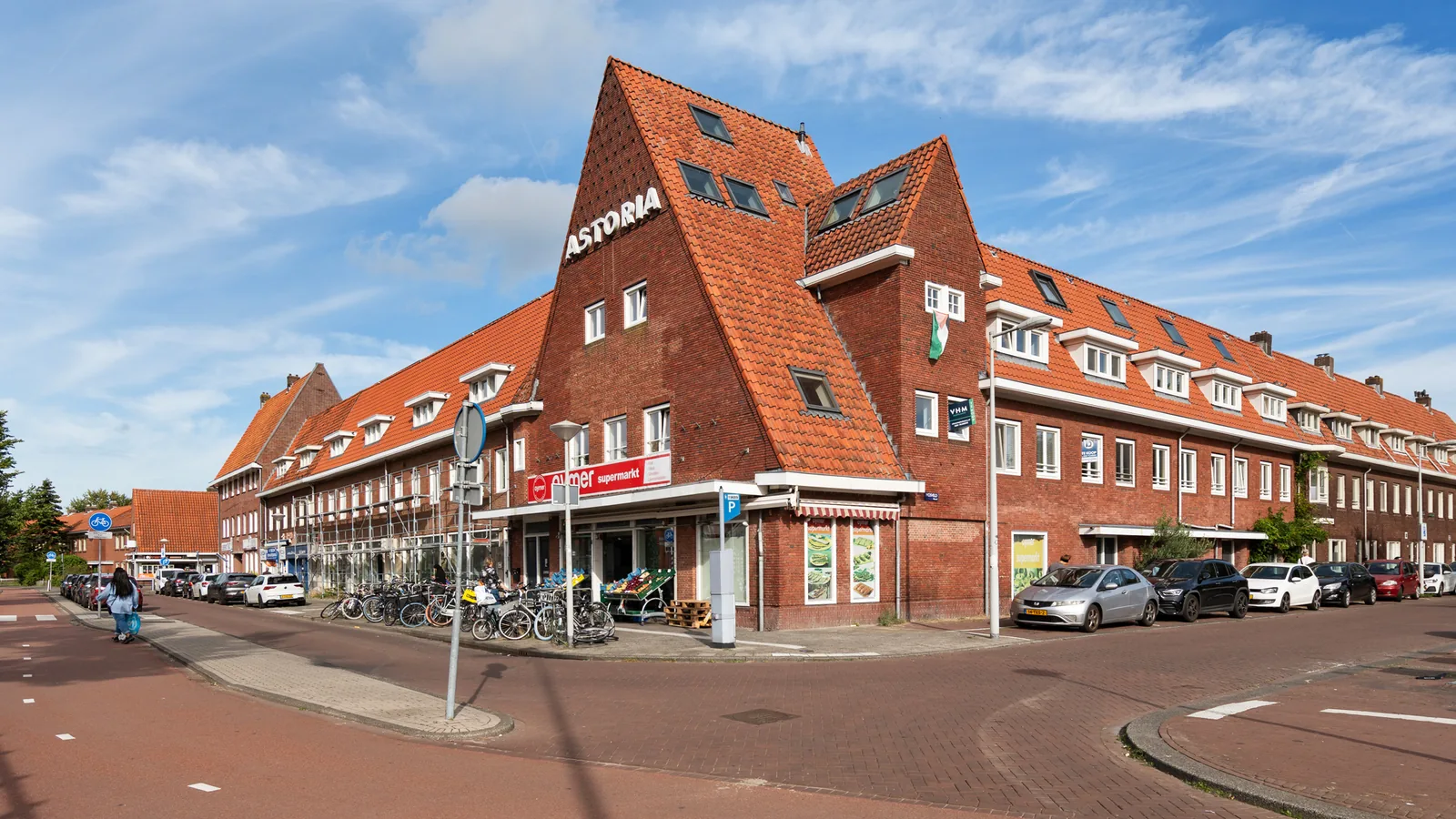
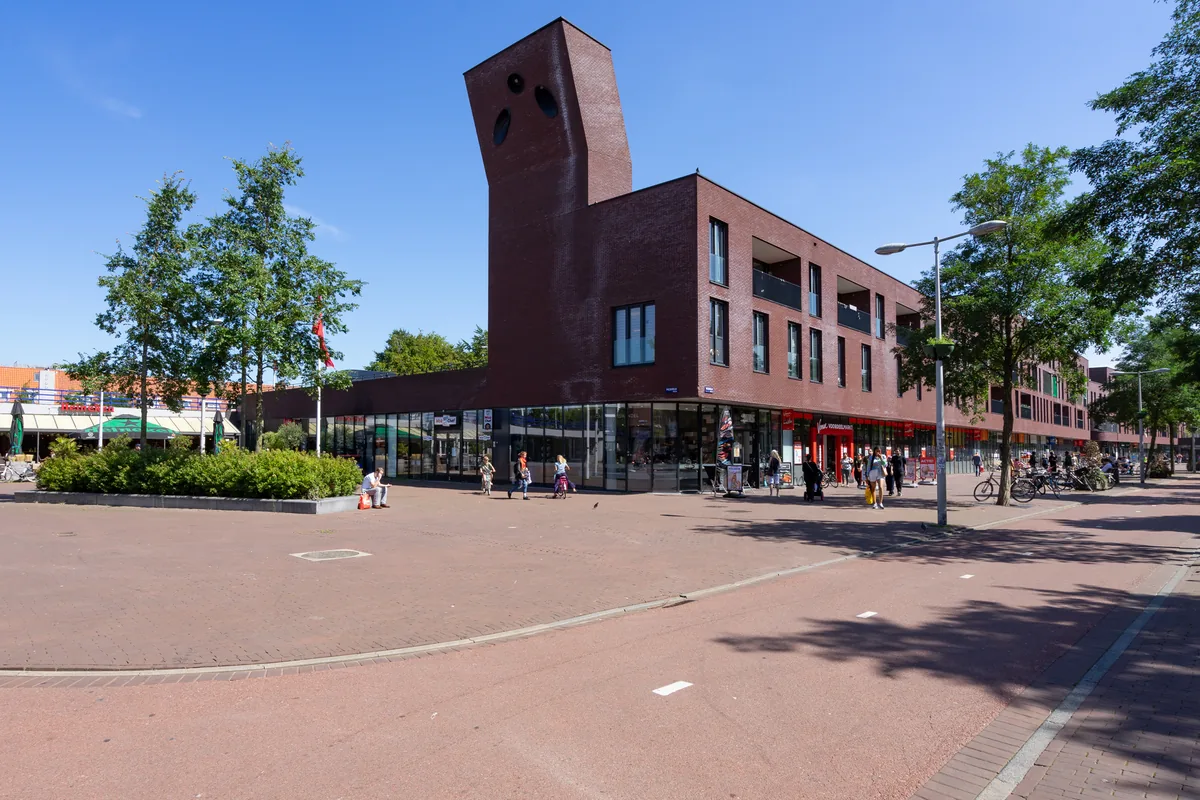
On the Mosplein in Amsterdam-Noord stands Astoria, designed by the same Willem Noorlander as the Ceintuur Theater. The building is in the style of the Amsterdam School (Amsterdamse School) and is part of a larger complex with shops and homes around the square. The cinema opened in May 1929 with 550 seats and was then the only official cinema in the whole of Noord.
In 1966 Astoria closed, because fewer and fewer people came, and the building was sold to the supermarket chain Albert Heijn. In 2012 the upper part was converted into twelve apartments. New windows were put into the facade for that, because in the cinema days the facade was almost completely closed, so the films could be seen as well as possible. Downstairs there is now a supermarket. On the corner of the building, the name Astoria still stands in large letters.
What is it like to live in an old cinema?
If you live in the Astoria, you notice little of the cinema inside. The apartments have been completely rebuilt and feel like new builds: modern kitchens, new bathrooms, good insulation. The past is in the building itself, in the 1929 facade, the new windows and the name on the corner.
The story almost always comes up during viewings. It is just nice to know that hundreds of people once sat watching a film where your living room is now. We currently have one of the apartments in the old Astoria for sale: Mosveld 96-D, with two bedrooms and a private roof terrace of 20 m² with a view over the city.
Who is the area around the Mosplein for?
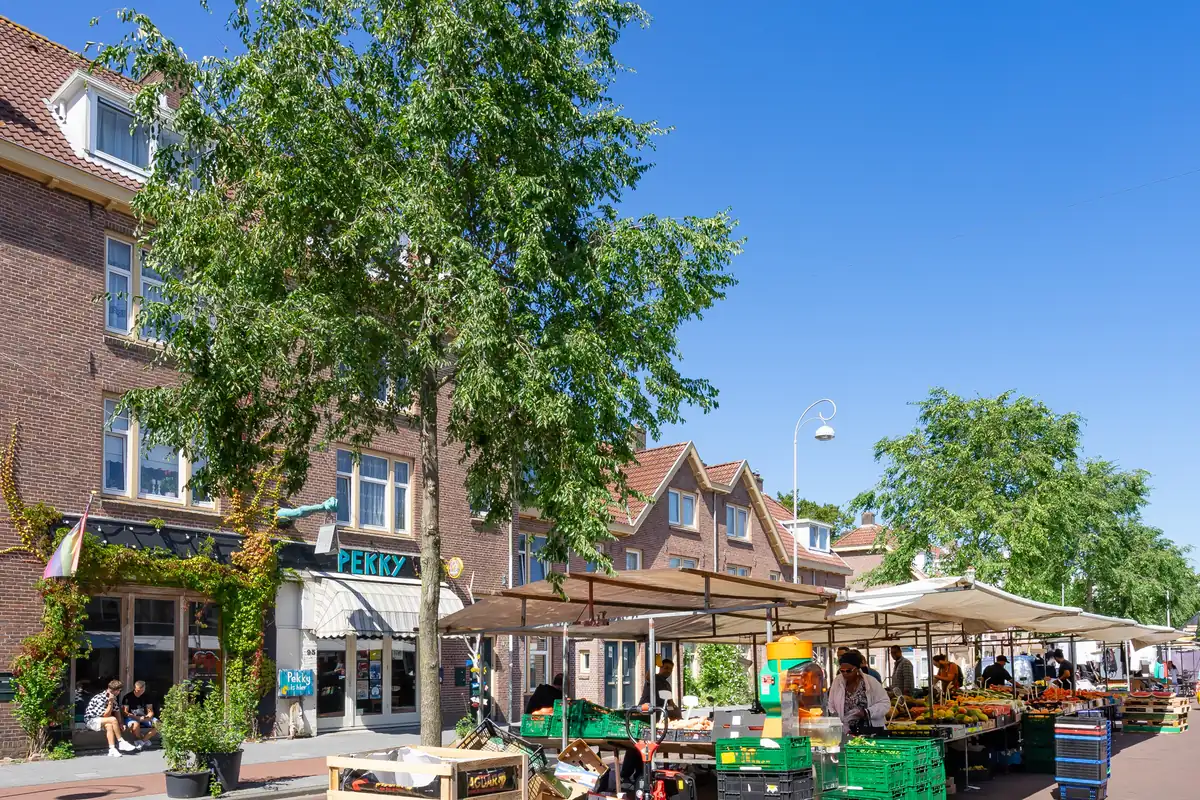
The Mosplein has had a real facelift in recent years. There is a mix of local shops and new businesses, and around the corner is the Van der Pekstraat, with a market, cafés and the typical homes of the Van der Pekbuurt. The Noorderpark with the Noorderparkbad swimming pool is close by, as are places like the Tolhuistuin and De Ceuvel.
With the Noord/Zuidlijn metro line, you are at Amsterdam Centraal in one stop, and by bike you are there within five minutes. That is why you see many first-time buyers and couples here, and people moving to Noord from elsewhere in the city because they get more space there without living far from the centre. You can read more about the neighbourhoods in Noord on our page about living in Amsterdam-Noord.
Looking for a home in Noord? Then a buying agent who knows the neighbourhoods will help. Selling yourself? Take a look at our selling agent page.
Do you know an old cinema in your neighbourhood with a good story? Feel free to let us know.
Frequently asked questions
How many cinemas did Amsterdam use to have?
In the twentieth century, around eighty cinemas opened in Amsterdam, one in almost every neighbourhood. From the 1960s onwards, most neighbourhood cinemas closed, because of television and later video.
What is in the old Cineac on the Reguliersbreestraat now?
A casino, since 2011. The neon letters Cineac still hang above the facade, and inside, the spiral staircase and the egg-shaped ceiling by architect Jan Duiker have been preserved.
When did the Astoria cinema in Amsterdam-Noord close?
In 1966, after 37 years. Astoria opened on the Mosplein in May 1929 and was then the only official cinema in Noord. Since 2012, the upper part of the building has housed twelve apartments.
Can you live in an old cinema in Amsterdam?
Yes. The former Astoria on the Mosplein has twelve apartments, and the old Olympia cinema in the Bellamystraat has been converted into nineteen rental homes. Inside they are modern homes, and you mainly see the past in the facade.