This walk through the centre of Amsterdam starts in the Huidenstraat in the Nine Streets (Negen Straatjes) and ends at the Kleine-Gartmanplantsoen next to the Leidseplein. Along the way you pass streets named after the old leather trade, the Looiersgracht, a shop full of Delft Blue on the Prinsengracht and forty bronze lizards. It is just over a kilometre: without stops you can do it in fifteen to twenty minutes, with stops it easily fills an afternoon.
What is the route?
The walk has four stops:
- The Huidenstraat and the Runstraat, between the Herengracht and the Prinsengracht.
- The Looiersgracht, on the other side of the Prinsengracht.
- Prinsengracht 440, close to the Leidsestraat.
- The Leidseplein and the Kleine-Gartmanplantsoen, where the Weteringschans begins.
Coming from the Singel, the Wijde Heisteeg takes you straight into the Huidenstraat. On the corner of the Singel is the tile shop StoryTiles, which we wrote about earlier.
Why is the Huidenstraat called the Huidenstraat?
The Huidenstraat is one of the Nine Streets: three rows of short streets that connect the Prinsengracht, the Keizersgracht, the Herengracht and the Singel. Some of the houses date from the first half of the seventeenth century.
The street names tell you what used to happen here. The Reestraat, Hartenstraat, Berenstraat and Wolvenstraat (roe deer, deer, bear and wolf) refer to the traders and craftsmen who worked with the hides of those animals. The Huidenstraat (huiden means hides) and the Runstraat come from the same trade in animal hides. Run is ground oak bark, which you needed to tan leather.
The name “Nine Streets” is much younger. In the 1990s the local shop owners decided to promote the area together as a shopping district, and in 1996 they founded the association De 9 Straatjes.
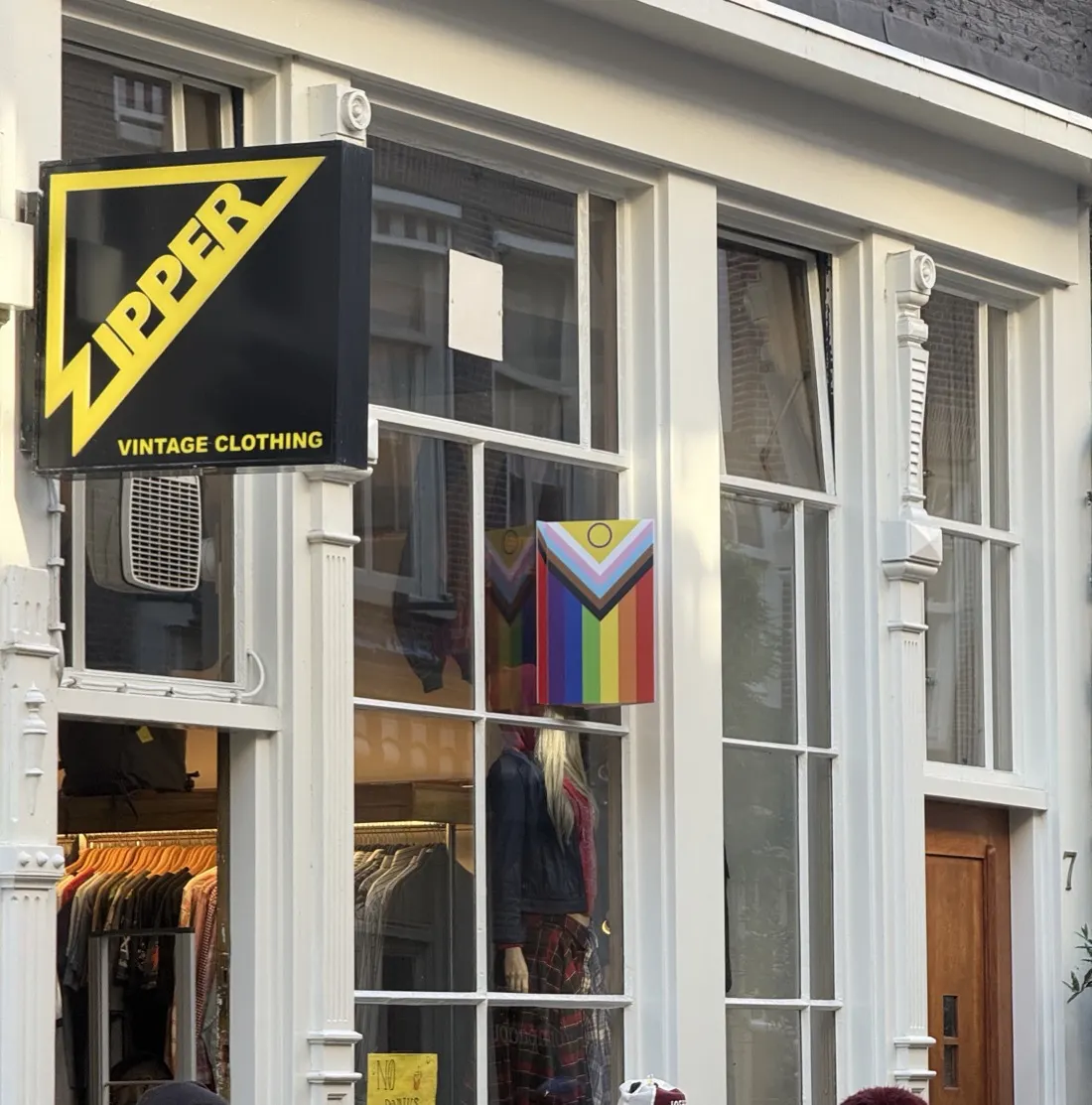
At number 7 you will find Zipper, a vintage shop that has been around since 1979. Behind the white shopfront with the black and yellow sign, the racks are full of jackets, shirts and jeans.
At the end of the Huidenstraat, cross the Keizersgracht and walk through the Runstraat to the Prinsengracht.
What is there to see on the Looiersgracht?
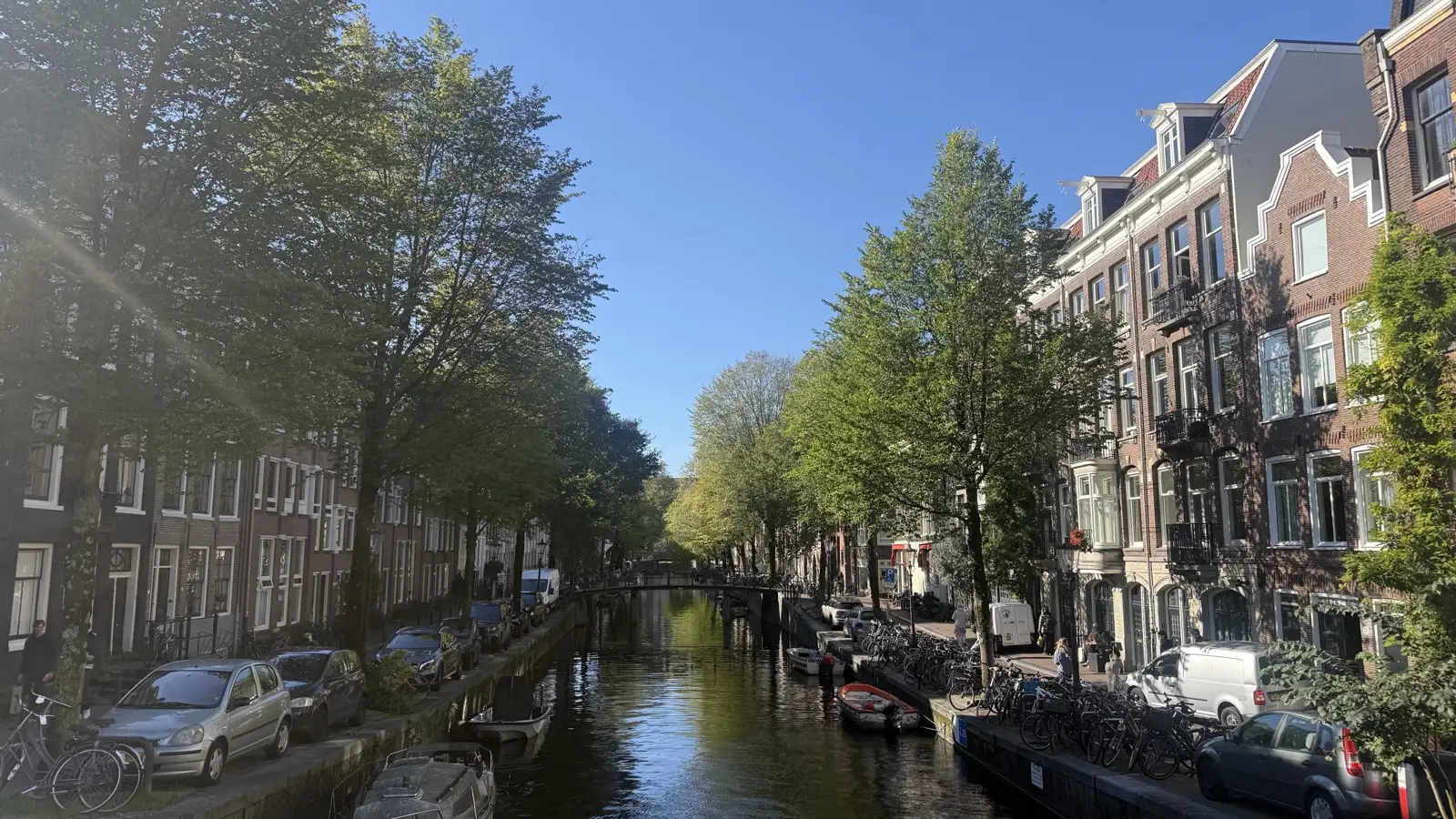
Almost directly opposite the end of the Runstraat, on the other side of the Prinsengracht, the Looiersgracht begins. It is a short canal in the Jordaan that runs to the Lijnbaansgracht. The name says it all: a looier is a tanner. This is where the tanneries were, and the canal was meant for that work from the start. So in a few minutes you walk from the street of the hides, via the street of the bark, to the canal of the tanners.
On the corner with the Prinsengracht, from the early seventeenth century until 1862, lay De Oude Doolhof (the Old Maze): a maze of green hedges, with a water feature and statues by Albert Vinckenbrinck.
As you walk along the canal, look out for the neck gable from 1648 at number 21 and the nineteenth-century wooden footbridge, a municipal monument. At numbers 70-72 stands the former Looiersgracht church, also known as Simon de Looier. Between the Looiersgracht and the Elandsgracht you will find Antiekcentrum Amsterdam, which many Amsterdammers still know as De Looier. You can spend hours there browsing among old things.
Where can you find Delft Blue on the Prinsengracht?
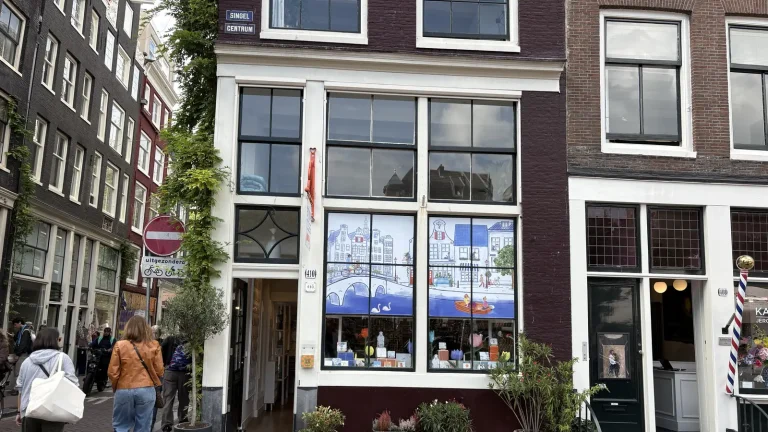
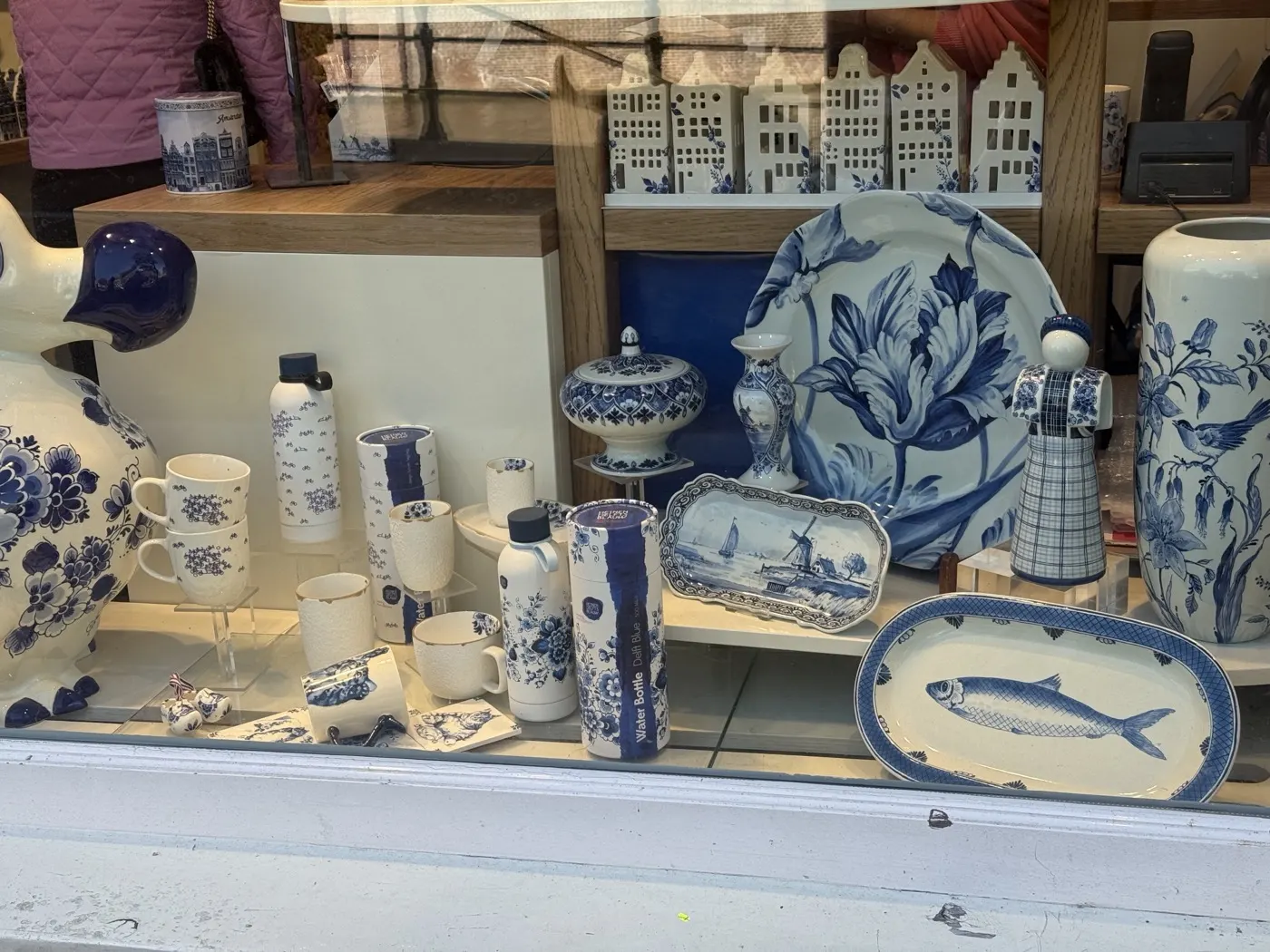
From the Looiersgracht, carry on along the same side of the Prinsengracht towards the Leidsestraat. At number 440 is Heinen Delfts Blauw, one of the shops the brand has in Amsterdam, Delft and Volendam.
The shop window shows how varied Delft Blue can be: a large plate with a tulip, a dish with a herring, a small dish with a windmill, canal houses in blue and white and even water bottles with a Delft pattern. It is a nice place to find a present for someone who has just moved to Amsterdam, or simply for yourself.
Why is the Leidseplein called the Leidseplein?
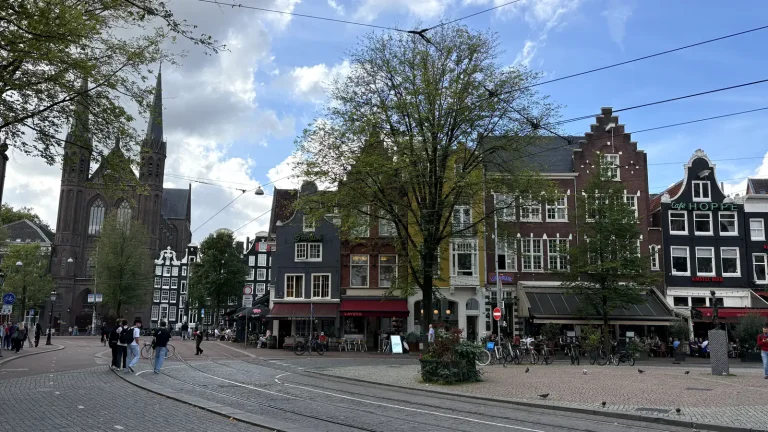
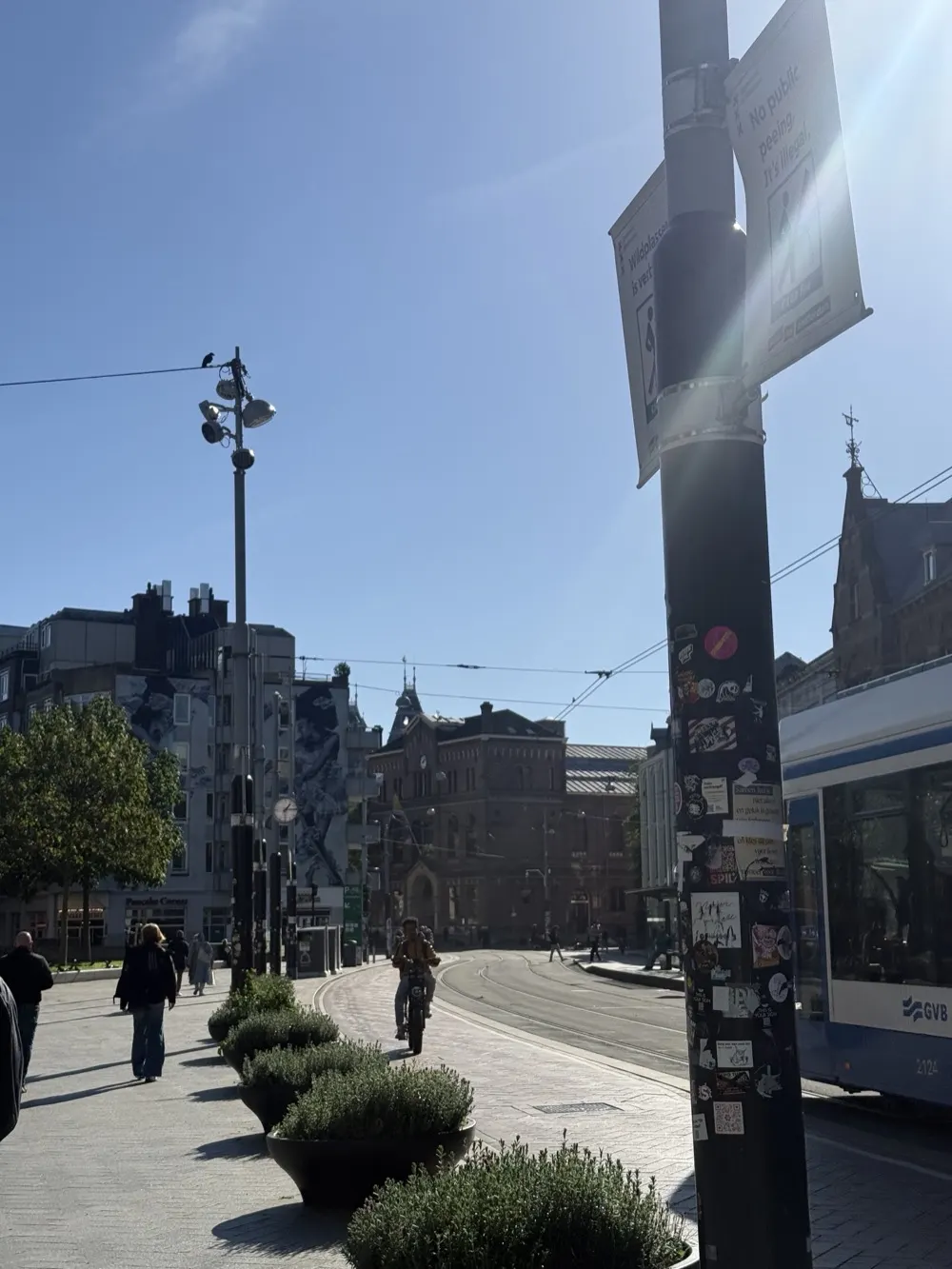
Via the Leidsestraat you reach the Leidseplein in a few minutes. Until 1862 the Leidsepoort, one of the city gates, stood here, and that is where the square gets its name. The square was laid out around 1660 as a wagon square: visitors from outside the city left their carts here before going into town.
Today the square is all about going out and culture. The Stadsschouwburg (city theatre) has stood here in its current form since 1894; the first theatre on this spot, from 1774, burned down in 1890. Across the square is the American Hotel from 1902, with Café Américain.
In 1875 the first horse-drawn tram in Amsterdam left from the Leidseplein. You will not see cars here anymore: the northern part of the square and the Leidsestraat have been car-free since 1971, the rest of the square since 2017.
What is there to see on the Kleine-Gartmanplantsoen?
Right next to the Leidseplein is the Kleine-Gartmanplantsoen. It is named after Maria Kleine-Gartman, a nineteenth-century actress who was attached to the Amsterdamse Schouwburg theatre for many years. A fitting neighbour for the Stadsschouwburg, then.
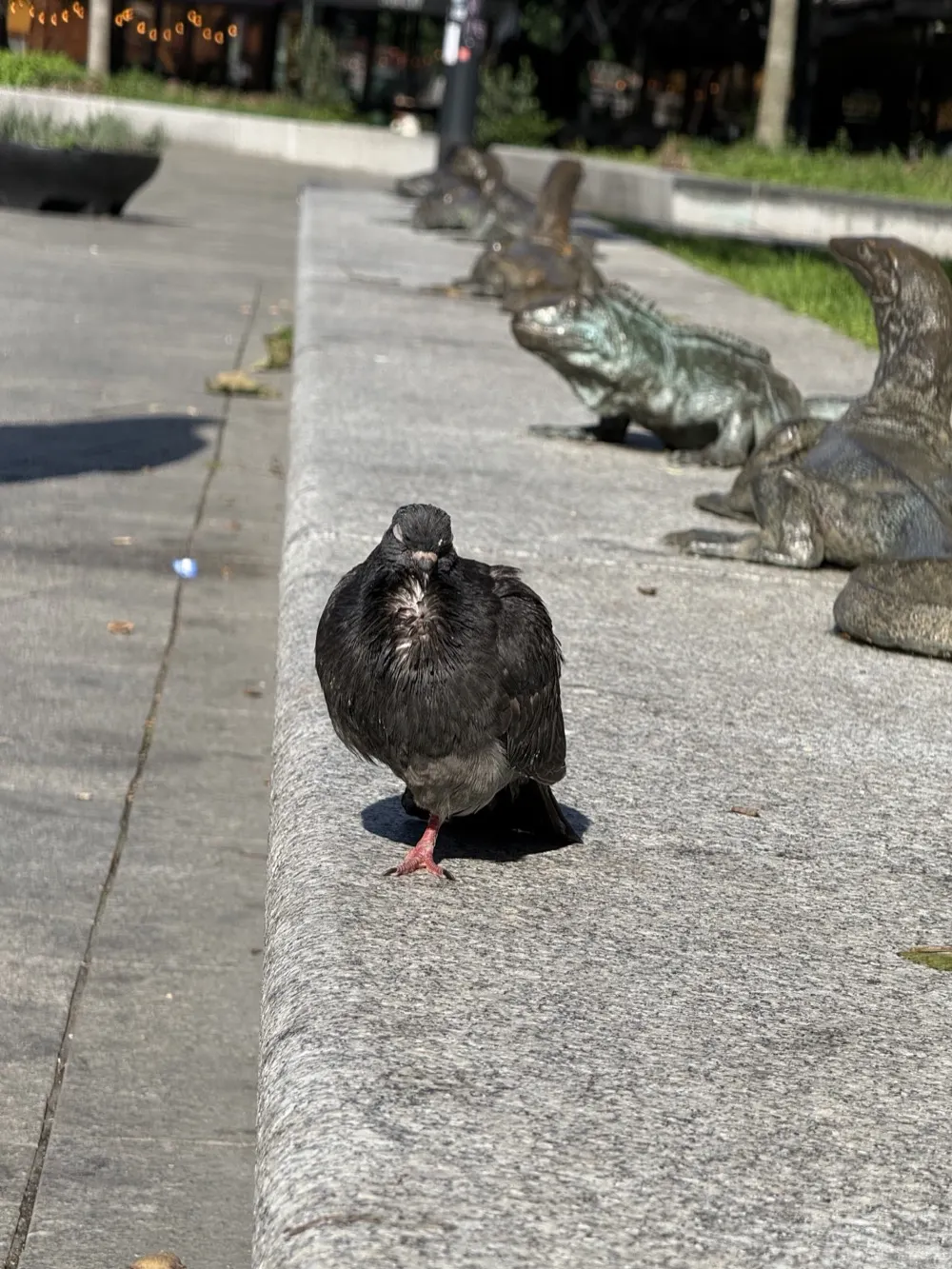
Since 1994 forty bronze lizards and iguanas have been lying in the park: the artwork Blauw Jan by Hans van Houwelingen. The name refers to Blauw Jan, a seventeenth-century inn near the Kloveniersburgwal with a courtyard full of animals. When a bicycle parking garage was built under the park, the lizards were removed for a while. Since May 2021 there has been room for 2,000 bicycles underground, and the lizards are back together, in a smaller bed. Inside the bicycle parking, lizards on the floor show you the way to the exit on the Leidseplein side.
The park also has a darker history. From 1850 the Huis van Bewaring, a prison, stood here. Anne Frank and the others who had been in hiding with her were held here in 1944 after their arrest. In May and July of that year the resistance tried to raid the prison to free prisoners, first led by Gerrit van der Veen and then by Johannes Post. Both attempts failed.
Need a coffee? On the park you will find Hagen, a coffee bar from a London brand with Danish roots, with a green marble counter. The chalkboard outside says “De beste koffie in de stad”, the best coffee in town. You can decide for yourself whether that is true.
This is also where the Weteringschans begins. If you want to keep going, you will pass Paradiso, a former church that has been a music venue since 1968.
What is it like to live along this route?
Around the Nine Streets and the Prinsengracht you usually live in a canal house or in a home above a shop. Many buildings are listed monuments, and you notice that when you want to renovate. The Looiersgracht is already part of the Jordaan and a little quieter. Around the Leidseplein it is busy until late, so living there mainly suits someone who enjoys having life around them. You can read more about living in the city centre on our page about Amsterdam-Centrum.
If you are looking for a home in the centre, a buying agent in Amsterdam who knows the streets can help. If you want to sell your own home here, take a look at our selling agent in Amsterdam page. Our office on the Singel is a few minutes’ walk from the start of this route. If you like stories like this about the city, also read our blog about the Spui.
Do you have a tip for this route that is not in here? Feel free to let us know.
Frequently asked questions
How long does the walk from the Huidenstraat to the Leidseplein take?
The route is just over a kilometre. Without stops you can walk it in fifteen to twenty minutes. Add a coffee, a few shops and a stretch of the Looiersgracht, and it easily fills an afternoon.
Why do the Nine Streets have animal names?
The Reestraat, Hartenstraat, Berenstraat and Wolvenstraat refer to the traders and craftsmen who used to work with the hides of those animals. The Huidenstraat and the Runstraat also come from that leather trade: run is ground oak bark used to tan leather.
Are the bronze lizards still in the Kleine-Gartmanplantsoen?
Yes. The forty lizards and iguanas of the artwork Blauw Jan have been there since 1994. They were gone for a while during the construction of the bicycle parking under the park; now they are back together in a smaller bed.
Where does the name Leidseplein come from?
From the Leidsepoort, the city gate that stood here until 1862. The square itself was laid out around 1660 as a wagon square, where people from outside the city parked their carts.