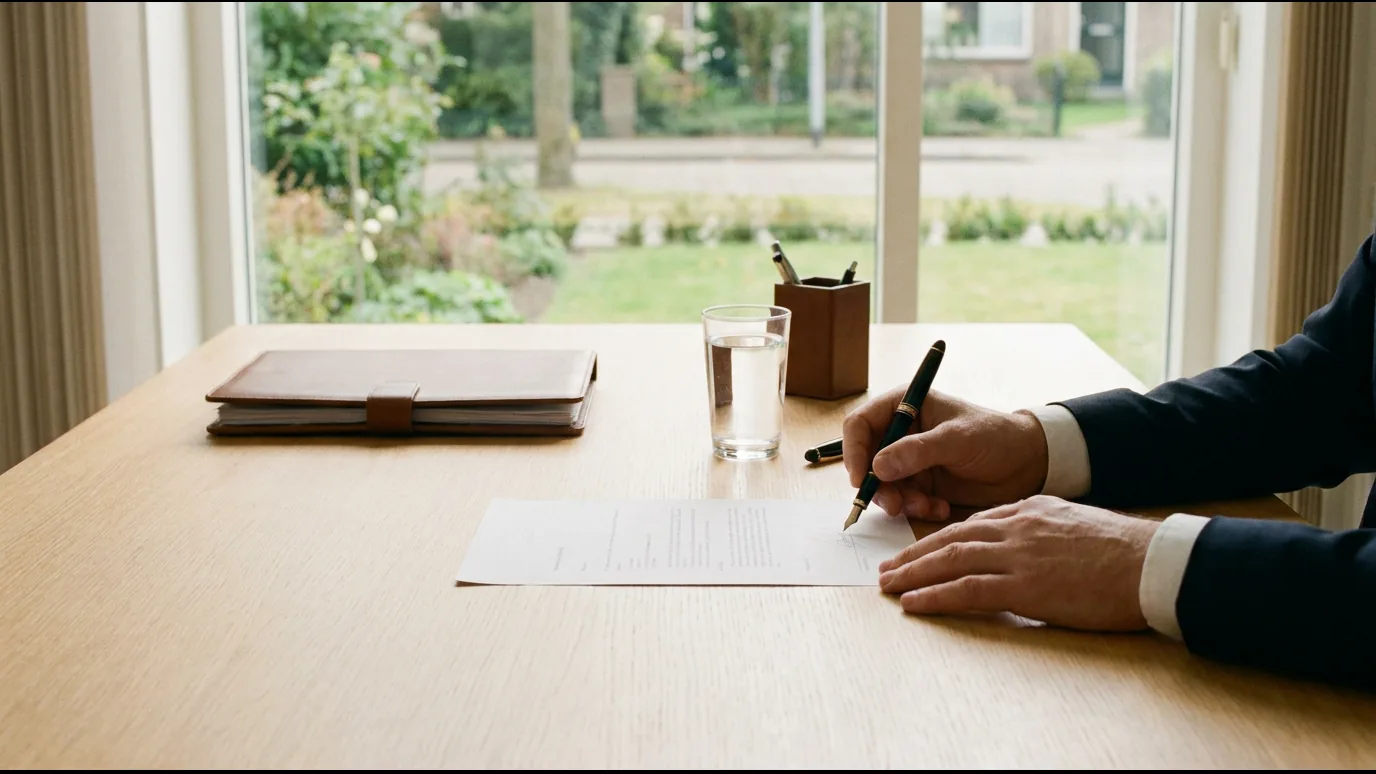
The deed of transfer (akte van levering) is the document that officially transfers a home from the seller to the buyer. The civil-law notary draws it up, buyer and seller sign it on the day of the transfer, and the notary then registers the deed with the Land Registry (Kadaster). Only at that moment are you the legal owner. The deed is also known as the leveringsakte or transportakte.
How is it different from the purchase agreement?
You sign the purchase agreement once you have agreed on the price and the conditions. In it, you agree that you will buy the home. You sign the deed of transfer weeks or months later at the notary. That is when the home is actually transferred.
In short: with the purchase agreement you buy the home, with the deed of transfer you become the owner.
What is in the deed of transfer?
The notary takes the agreements from the purchase agreement and adds what they have looked into themselves. The deed includes, among other things:
- The details of the buyer and the seller;
- The purchase price;
- The land registry details of the home, such as the cadastral designation and the size of the plot;
- For an apartment: the apartment right and the owners’ association (VvE);
- Ground lease (erfpacht), if the home is on leasehold land, with the conditions that come with it;
- Easements and other rights and obligations attached to the home, for example a neighbour’s right of way;
- The seller’s guarantees and the agreements about the condition in which the home is handed over.
How does it work in practice?
About a week before the transfer, the notary sends you the draft deed and the statement of settlement (nota van afrekening). This statement shows exactly what you have to pay: the purchase price, the transfer tax, the notary’s fees and the settlement of, for example, the VvE contribution or the ground rent for the rest of the year.
Read the draft deed carefully and ask your questions in advance. If you have a buying agent, they read along. That way there are no surprises at the notary.
On the day itself we first do the final inspection, and then we go to the notary. The notary reads out the main points of the deed, explains what it says and then you sign. If you are buying with a mortgage, you sign the mortgage deed at the same time. After that you get the keys.
When are you really the owner?
Legally, you are the owner as soon as the notary has registered the deed in the public registers of the Land Registry. The notary usually does this the same day. Only then does the notary pay the purchase price to the seller. That way the seller knows for sure they will get their money, and you know for sure you are the owner before the money has gone.
Why is registration with the Land Registry so important?
Registration means anyone can see who owns the home. The Land Registry keeps that information public. It also protects you: after registration, the seller cannot sell the home to someone else again or still put a mortgage on it.
Not sure what a deed says, or would you like someone who goes through all the documents with you when you buy? Read what you can expect from us as your buying agent, or get in touch with us.
Frequently asked questions
Is a deed of transfer mandatory?
Yes. In the Netherlands, a home can only be transferred with a notarial deed that is registered with the Land Registry. Without a deed you do not become the owner.
Who chooses the notary?
Usually the buyer. The buyer also pays the costs of the deed of transfer. These costs are on the statement of settlement.
Do I get a copy of the deed?
Yes. After the transfer the notary sends you a copy. Keep it safe, you will need it later when you sell the home again.
What is the difference between the deed of transfer and the mortgage deed?
The deed of transfer arranges the transfer of the home from seller to buyer. The mortgage deed arranges the loan from the bank, with the home as security. You usually sign them shortly after each other at the same notary.